July 2026
In my very first monthly journal entry, I explore how nostalgia, memory, and Tarkovsky’s visual language shape my studio practice. I dive into why I work with fluid watercolours, unprimed canvas, and exposed armatures—and why I respectfully disagree with Tarkovsky on what art can achieve.
Core Themes
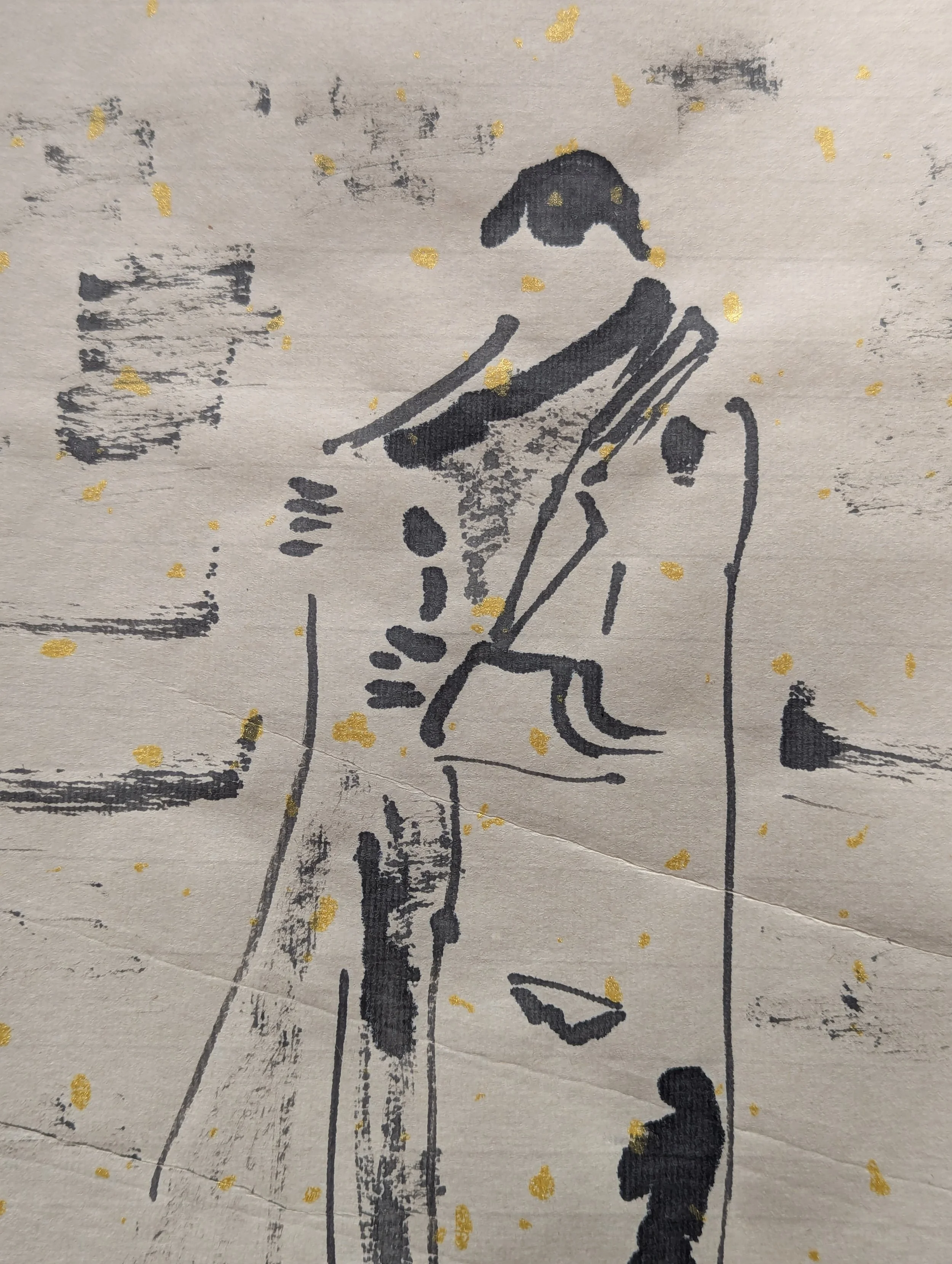
My visual art explores the delicate architecture of the human experience through three core themes: nostalgia, memory, and ‘spilled milk’.
Nostalgia—defined as a sentimental longing for a past moment or place—serves as my emotional anchor. I return to it because it captures the quiet ache of distance, allowing me to translate longing into a tangible, sensory form.
Connected to this is memory, the mind's active process of retaining, altering, and retrieving past experiences. I am endlessly fascinated by memory because it is rarely fixed; it is fluid, constantly reshaping itself over time, much like the physical materials in my studio.
Finally, I engage with the concept of ‘spilled milk’—a motif drawn directly from Andrei Tarkovsky’s striking visual vocabulary. It represents irreversible loss, unexpected disruption, and the sudden breaking of order. I incorporate this theme because, much like Tarkovsky's lingering frames, it confronts us with the quiet beauty and finality of what cannot be undone—forcing a pause, a shift in perspective, and a reexamination of the residue left behind.
Why?
Andrei Tarkovsky’s cinema holds space for the full spectrum of human emotional experience—where sorrow, suffering, and quiet joy exist in a single, unhurried frame. He turns his lens toward childhood not as a distant fantasy, but as a living landscape inhabited by loyal dogs, rural silence, and the continuity of generations anchored to the same plot of earth. Most of all, I am drawn to his obsession with organic textures: the wooden house, which breathes, weathers, and ages alongside its occupants, growing old together. Unlike modern structures of brick or concrete—indifferent walls that merely watch you die—a wooden home carries the living weight of time, decaying gently in harmony with the lives lived inside it.
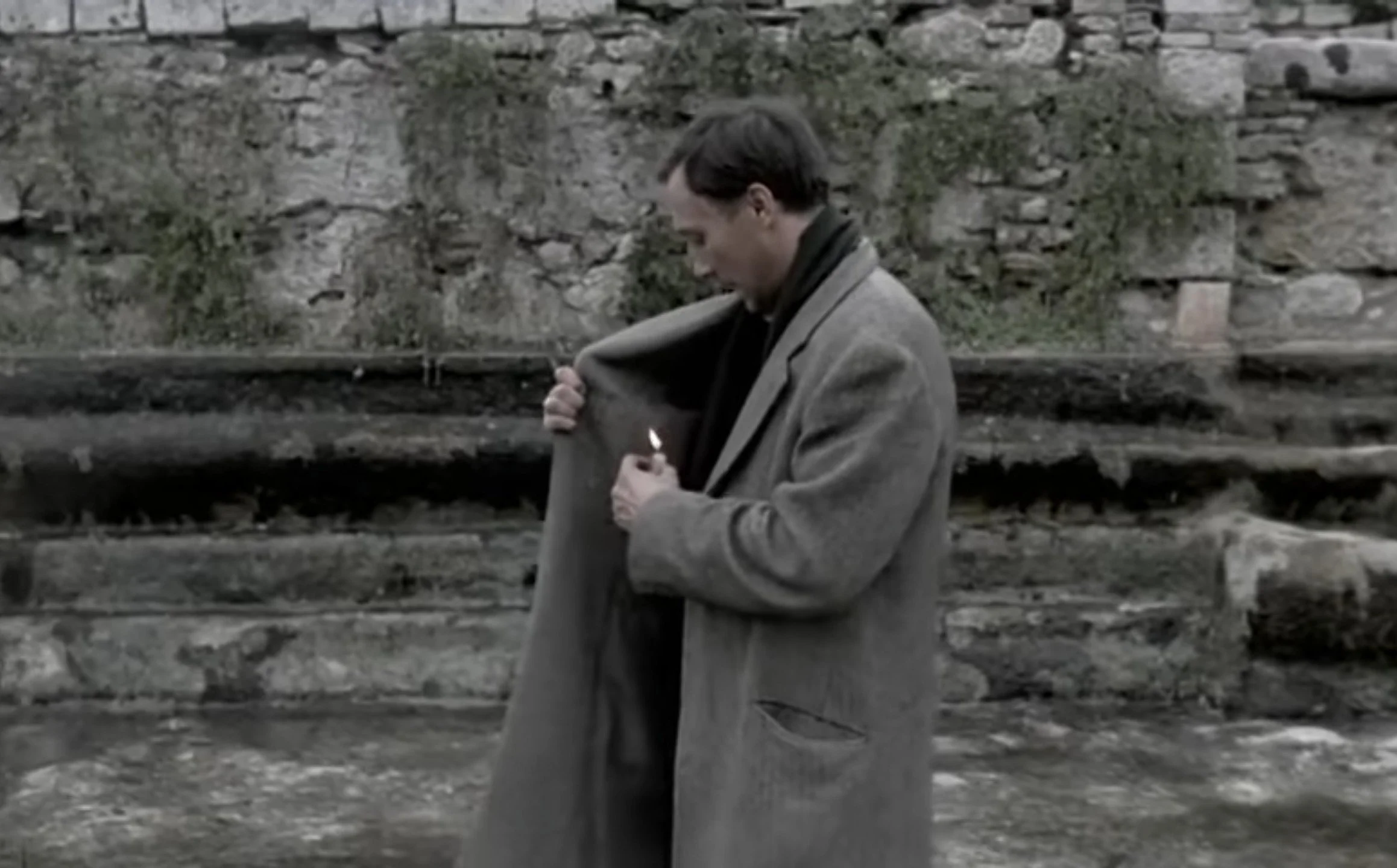
Oleg Yankovsky in Nostalghia (1983) by Andrei Tarkovsky
O
Ma v ie
Endormie dans un linceul
Doré et éternel
Je me réveille un matin,
Happée par la volonté de vivre,
Entendez- vous ma voix?
Abîmée par les années de deuil
Dorées et éternelles
J’ouvre enfin les yeux,
Frappée par la volonté de vivre,
Entendez-vous ma voix?
Émerveillée par la lumière au seuil
De ma pensée
Mon âme glisse
Lapée par les vagues de la vie
Je marche désormais sur ma voie.
Saffya Alaoui - 2023
Raising to the challenge
Tarkovsky once stated in an interview:
“Cinema has a poetic meaning of its own because there’s a part of life, a part of the universe that has never been addressed at all by other artistic forms and genres. What cinema can do, music and all the other art forms cannot do.”
I disagree with his statement. I have made it my ambition to demonstrate that another visual artistic genre can capture that very same poetic universe.
My work
I am Inspired by Andrei Tarkovsky, Anton Chekhov, Leo Tolstoy, and Arseny Tarkovsky—with one motto in mind: Simplicity without flourish.
Tarkovsky’s cinematic reflections directly dictate how I construct a piece and what I build it with. To give form to memory, I work with raw, unprimed canvas, choosing watercolor precisely because of its unforgiving honesty—it washes across the surface, leaving behind permanent, ghost-like traces of where it has been. I build depth through interlocking layers, balancing deliberate, repeated gestures with the raw evidence of accidental spills and spontaneous bleeds. To bring structure to these fluid washes, I construct armatures with exposed copper wire and metal rods, interweaving them with threads. Presented without a frame, the work remains open and vulnerable to the viewer's space, transforming physical matter into a living archive of process, touch, and lingering presence.
A tapestry or a sculpture of thread is a physical monument to time made visible. Every thread represents a single, repeated moment of human presence—a rhythmic gesture preserved in space long after the hands that wove it have moved on. Unlike a flat image, a woven textile holds memory in its very structure: the warp and weft interlock to trap tension, warmth, and subtle imperfections. As raw fibers, jute, and metal wires entwine, the work acts like an artifact of domestic life or a fragment of an old home, evoking a sensory longing for touch, lineage, and the quiet spaces we once inhabited. It does not merely depict a past moment; it embodies the slow, cumulative weight of time passing.